Sony announced that it’s considering launching a Firefox OS phone next year and today released an experimental ROM to run the new Mozilla-made OS on the Sony Xperia E.
This will give app developers a chance to evaluate the platform and give Sony valuable feedback.
In case you’re wondering why the company picked the Xperia E and not a more powerful phone, the answer is pretty simple – Firefox OS will target the very low end of smartphones.
The E has almost the exact same specs as the ZTE Open and Alcatel OT Fire, the first two Firefox phones that were.
Anyway, the ROM is not intended for daily use – there’s no wireless connectivity of any kind as the software has not passed certification and the touchscreen and the microSD card might not work all too well.
The Sony Developer Blog has details on how to flash the ROM, the architecture of Firefox OS and how to develop apps for it.
Sunday, October 27, 2013

Keon firefox OS
Keon mobile phone

GeeksPhone Keon and Peak, the first generation smartphones that runs on the HTML 5-based Firefox OS were announced a while back and the company has now revealed info on the availability and the pricing of the smartphone.
GeeksPhone has officially confirmed the price tags of both smartphones and those are among the lowest on the market. GeekPhone Keon will cost you €91 (about $120) and the Peak is priced at €149 (about $195). Neither price includes taxes so, depending on your country, the final price will probably be higher.
The Keon and Peak will be available from the GeeksPhone's online shop, starting from next week and the smartphones will be shipped worldwide.
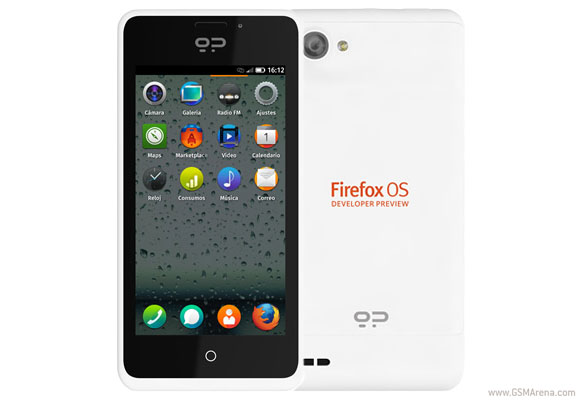
GeeksPhone Keon and Peak, the first generation smartphones that runs on the HTML 5-based Firefox OS were announced a while back and the company has now revealed info on the availability and the pricing of the smartphone.
GeeksPhone has officially confirmed the price tags of both smartphones and those are among the lowest on the market. GeekPhone Keon will cost you €91 (about $120) and the Peak is priced at €149 (about $195). Neither price includes taxes so, depending on your country, the final price will probably be higher.
The Keon and Peak will be available from the GeeksPhone's online shop, starting from next week and the smartphones will be shipped worldwide.
Geeksphone PEAK+ with firefox OS

Geeksphone has started taking pre-orders for the Peak+ Firefox-powered phone. Geeksphone typically makes phones targeted at devs or tech savvy enthusiast, but says the Peak+ is also ready for consumers.
It's a small upgrade over the regular Peak – the RAM has been doubled to 1GB and the material used for the exterior has been changed to make it feel better to the touch. The phone will come with Firefox OS 1.1 out of the box, the same version the other two (Peak and Keon) recently got.
Other than that, you're still getting a Snapdragon 8225 S4 Play chipset (dual-core Cortex-A5 at 1.2GHz, Adreno 203 GPU), 4.3" IPS screen qHD (540 x 960) resolution, 4GB storage plus microSD cards slot and a 1,800mAh battery.
The Geeksphone Peak+ pre-order is at a promo price of €150 ($200), the same as the original Peak. This price will go up slightly after the initial batch of units is sold out (there's no indication what the standard price will be). The original Peak sold out fairly quickly.
If you pre-order now, Geeksphone will ship your Peak+ in mid-September.
Update: We were contacted by a Mozilla spokesperson who wanted to clarify that while based on the Boot to Gecko project, the new smartphone isn't technically a Firefox OS device.
LG's first Firefox OS mobile is available soon
LG's first Firefox OS mobile

Firefox OS could be considered still in its infancy but as bigger OEMs hop on the train it could gain traction faster than expected. LG is the first major manufacture to premiere a Firefox OS handset of its own.
The LG Fireweb is the Mozilla-powered smartphone a 5MP autofocus and LED-enabled camera. It sports a 4" display of HVGA resolution (480 x 320 pixels), single-core 1 GHz Qualcomm processor, 4 GB built-in storage plus a microSD card slot.
The device has gone on sale on Brazilian carrier Vivo's network. It only costs prepaid customers BRL449 ($207), while on contract it can be had for BRL129 ($59).
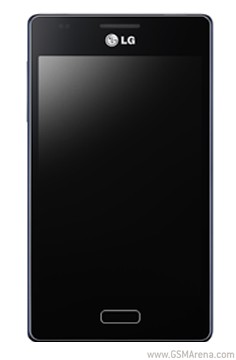
Firefox OS could be considered still in its infancy but as bigger OEMs hop on the train it could gain traction faster than expected. LG is the first major manufacture to premiere a Firefox OS handset of its own.
The LG Fireweb is the Mozilla-powered smartphone a 5MP autofocus and LED-enabled camera. It sports a 4" display of HVGA resolution (480 x 320 pixels), single-core 1 GHz Qualcomm processor, 4 GB built-in storage plus a microSD card slot.
The device has gone on sale on Brazilian carrier Vivo's network. It only costs prepaid customers BRL449 ($207), while on contract it can be had for BRL129 ($59).
Firefox OS core technologies
Core Technologies for Firefox OS
The initial development work involves three major software layers:
Gonk – the underlying Linux-based kernel and hardware abstraction layer;
Gecko – a layout engine and application run-time services layer; and
Gaia – an HTML5 layer and user-interface system.
Gonk consists of a Linux kernel and user-space hardware abstraction layer (HAL). The kernel and several user-space libraries are common open-source projects: Linux, libusb, BlueZ, etc. Some other parts of the HAL are shared with the Android project: GPS, camera, among others. Gonk is basically an extremely simple Linux distribution and is therefore from Gecko's perspective, simply a porting target of Gecko; there is a port of Gecko to Gonk, just like there is a port of Gecko to OS X, and a port of Gecko to Android. However, since the development team have full control over Gonk, the developers can fully expose all the features and interfaces required for comprehensive mobile platforms such as Gecko, but which aren't currently possible to access on other mobile OSes. For example, using Gonk, Gecko can obtain direct access to the full telephony stack and display framebuffer, but doesn't have this access on any other OS.
Gecko is the application runtime of Firefox OS. Gecko implements open standards for HTML, CSS, and JavaScript. Gecko includes a networking stack, graphics stack, layout engine, virtual machine (for JavaScript), and porting layers.
Gaia is the user interface of Firefox OS and controls everything drawn to screen. Gaia includes by default implementations of a lock screen, home screen, telephone dialer and contacts application, text-messaging application, camera application and a gallery support, plus the classic phone apps: mail, calendar, calculator and marketplace. Gaia is written entirely in HTML, CSS, and JavaScript. It interfaces with the operating system through Open Web APIs, which are implemented by Gecko. Because it uses only standard web APIs, it can work on other OSes and other web-browsers.
The initial development work involves three major software layers:
Gonk – the underlying Linux-based kernel and hardware abstraction layer;
Gecko – a layout engine and application run-time services layer; and
Gaia – an HTML5 layer and user-interface system.
Gonk consists of a Linux kernel and user-space hardware abstraction layer (HAL). The kernel and several user-space libraries are common open-source projects: Linux, libusb, BlueZ, etc. Some other parts of the HAL are shared with the Android project: GPS, camera, among others. Gonk is basically an extremely simple Linux distribution and is therefore from Gecko's perspective, simply a porting target of Gecko; there is a port of Gecko to Gonk, just like there is a port of Gecko to OS X, and a port of Gecko to Android. However, since the development team have full control over Gonk, the developers can fully expose all the features and interfaces required for comprehensive mobile platforms such as Gecko, but which aren't currently possible to access on other mobile OSes. For example, using Gonk, Gecko can obtain direct access to the full telephony stack and display framebuffer, but doesn't have this access on any other OS.
Gecko is the application runtime of Firefox OS. Gecko implements open standards for HTML, CSS, and JavaScript. Gecko includes a networking stack, graphics stack, layout engine, virtual machine (for JavaScript), and porting layers.
Gaia is the user interface of Firefox OS and controls everything drawn to screen. Gaia includes by default implementations of a lock screen, home screen, telephone dialer and contacts application, text-messaging application, camera application and a gallery support, plus the classic phone apps: mail, calendar, calculator and marketplace. Gaia is written entirely in HTML, CSS, and JavaScript. It interfaces with the operating system through Open Web APIs, which are implemented by Gecko. Because it uses only standard web APIs, it can work on other OSes and other web-browsers.
About Firefox OS
Firefox OS
A Linux based operating system with open source for smartphones and tablet computers. The Firefox OS is developed by Firefox web browsing.
Firefox OS is designed to provide a "complete" community-based alternative system for mobile devices, using open standards and approaches such as HTML5 applications, JavaScript, a robust privilege model, open web APIs to communicate directly with cellphone hardware, and application marketplace. As such, it competes with proprietary systems such as Apple's iOS and Microsoft's Windows Phone, as well as other open source systems such as Android, Jolla's Sailfish OS and Ubuntu Touch. Firefox OS was publicly demonstrated in February 2012, on Android-compatible smartphones, and again in 2013 running on Raspberry Pi. In January 2013, at CES 2013, ZTE confirmed they would be shipping a smartphone with Firefox OS, and on July 2, 2013, Telefónica launched the first commercial Firefox OS based phone, ZTE Open, in Spain which was quickly followed by GeeksPhone's Peak+.
A Linux based operating system with open source for smartphones and tablet computers. The Firefox OS is developed by Firefox web browsing.
Firefox OS is designed to provide a "complete" community-based alternative system for mobile devices, using open standards and approaches such as HTML5 applications, JavaScript, a robust privilege model, open web APIs to communicate directly with cellphone hardware, and application marketplace. As such, it competes with proprietary systems such as Apple's iOS and Microsoft's Windows Phone, as well as other open source systems such as Android, Jolla's Sailfish OS and Ubuntu Touch. Firefox OS was publicly demonstrated in February 2012, on Android-compatible smartphones, and again in 2013 running on Raspberry Pi. In January 2013, at CES 2013, ZTE confirmed they would be shipping a smartphone with Firefox OS, and on July 2, 2013, Telefónica launched the first commercial Firefox OS based phone, ZTE Open, in Spain which was quickly followed by GeeksPhone's Peak+.
Subscribe to:
Comments (Atom)